On 15 August 2026, Prime Minister Narendra Modi made an unusually direct observation: India’s older civil-defence arrangements had become outdated. He called for a modern volunteer network able to respond to contemporary risks, including threats to refineries, banking systems, data centres and other critical infrastructure.
That was more than a passing line. It acknowledged both progress and vulnerability. India has expanded disaster institutions, but rising urban density, digital dependence, extreme weather and cascading infrastructure risks have made civilian protection more complex.
The central question, therefore, is not whether India possesses more institutions than it did in 2014. It plainly does. The real question is whether those institutions form a reliable chain from national warning to local action.
What readiness should mean
Civil defence is sometimes treated as a wartime concept. Its practical purpose is broader: protecting civilians, essential services and public order when a serious emergency reaches populated areas.
The same capabilities may be needed after a hostile strike, cyclone, earthquake, industrial fire, chemical leak or prolonged infrastructure failure. Authorities must detect the danger, issue a credible warning, tell people what to do, activate command arrangements, move or shelter those at risk, sustain medical and fire response, protect critical services and begin recovery. A weakness at any point can break the chain.
India did not begin from zero in 2014. The Civil Defence Act and Rules had long provided a legal base. The institutions created after the Disaster Management Act, 2005—including the National Disaster Management Authority, state and district authorities, the National Disaster Response Force and the National Institute of Disaster Management—were already in place.
But important gaps remained. India’s first National Disaster Management Plan would not arrive until 2016. Public warning was fragmented. Scientific observation networks were smaller. Mitigation finance was less developed, and the ability to coordinate institutions across increasingly complex urban risks remained limited.
A stronger national architecture
The first National Disaster Management Plan was issued in 2016 and revised in 2019, giving India a national framework across prevention, preparedness, response and recovery. National guidelines issued in 2024 also brought greater discipline to the design and evaluation of disaster-management exercises.
The Disaster Management (Amendment) Act, 2025 went further. It received presidential assent on 29 March and came into force on 9 April 2025. The law gave statutory recognition to key crisis bodies, enabled national and state disaster databases, and allowed states to create Urban Disaster Management Authorities and State Disaster Response Forces.
These changes are important because India’s risk is increasingly concentrated in cities. High-rise buildings, ageing utilities, congested transport, industrial clusters and digital dependence can turn a local incident into a cascading emergency. A city requires more than a general disaster plan; it needs named command responsibility, interoperable control rooms, hospital and fire-service coordination, continuity plans for utilities, and regular exercises involving the public.
Implementation has lagged behind legislation. In February 2026, the Union government identified Karnataka’s authority for the Bengaluru municipal area as the only constituted Urban Disaster Management Authority. An August 2026 parliamentary committee again reported that only one state had created such an authority. The committee also concluded that the 2019 national plan required further revision following the 2025 amendment and other policy changes.
India has strengthened the rulebook. The urgent task is to make the institutions authorised by that rulebook operational.
More money, with a more preventive purpose
Disaster finance has expanded substantially. According to a February 2026 Ministry of Home Affairs reply in the Rajya Sabha, State Disaster Response Fund allocations increased from ₹61,220 crore during 2015–20 to ₹1,28,122 crore during 2021–26—an increase of about 109 per cent.
India also created separate mitigation windows. During 2021–26, ₹32,031 crore was provided for State Disaster Mitigation Funds and ₹13,693 crore for the National Disaster Mitigation Fund. This matters because resilience cannot be built only through compensation and relief after lives and assets have already been lost. Drainage, fire services, safer public buildings, warning systems, resilient communications and maintained shelters require investment before an emergency.
The Sixteenth Finance Commission has recommended ₹2,04,401 crore for state disaster funds for 2026–31, comprising ₹1,63,521 crore for response funds and ₹40,880 crore for mitigation funds. It has also recommended ₹79,406 crore for national disaster funds and proposed that preparedness and capacity-building expenditure be supported through the mitigation windows. Its recommendation to nationally notify heatwaves and lightning also reflects the changing risk landscape.
These figures show fiscal capacity, not guaranteed readiness. Allocations, releases and expenditure must be judged by whether equipment works, infrastructure is maintained and personnel can perform under pressure.
Response forces are closer to risk—but not fully staffed
India’s specialist response footprint is wider than it was in 2014. By February 2026, the NDRF operated through 16 battalions, 28 Regional Response Centres and 25 Tactical Pre-positioning Locations—a presence across 69 locations.
The force, however, remained below its sanctioned strength. A March 2026 parliamentary committee recorded 14,837 personnel in position against an authorised 18,581, a shortfall of 3,744. It also noted that only about one-tenth of the NDRF’s 2026–27 budget estimate was under capital expenditure, raising questions about the pace of modernisation without by itself proving underinvestment.
Fire services reveal a similar combination of progress and uneven execution. The Union government’s ₹5,000-crore modernisation scheme was announced in July 2023, and proposals worth ₹3,373.12 crore from 20 states had been approved by March 2025. Yet an August 2026 parliamentary assessment found that only ten states had adopted the 2019 model fire legislation.
There is also a discrepancy in the official record: the contemporaneous government announcement dates the scheme to 4 July 2023, while a later Rajya Sabha reply records 4 July 2022. This review uses the contemporaneous 2023 date while retaining the inconsistency in its research record.
The broader lesson is clear. India has created more response capacity, but sanctioned strength, approved proposals and model laws must be converted into people, equipment and response times that can be tested.
Warning systems have changed the national picture
Public warning may be the most significant transformation of the period.
The SACHET platform, based on the Common Alerting Protocol, operates across all 36 states and union territories. By 2026, the government reported that it had disseminated more than 134 billion SMS alerts in more than 19 Indian languages. On 2 May 2026, India launched a nationwide Cell Broadcast Service integrated with SACHET. It can send simultaneous, geo-targeted and multilingual warnings to compatible mobile phones across 2G–5G networks.
The scientific systems beneath those warnings have also expanded. India’s seismic observatory network grew from 80 stations in 2014 to 168 by February 2025. Mission Mausam, approved in September 2024 with an outlay of ₹2,000 crore over two years, is intended to strengthen radars, observations, computing and forecasting.
Together, these systems give India a far stronger chain from detection to mass communication than it possessed in 2014. But transmission is not the final measure of success. A message can reach a phone and still fail if recipients do not trust it, understand it or know what action to take.
“Severe weather expected” is information. “Move to higher ground by 4 p.m. using the eastern route” is an instruction. Alerts must also reach people without reliable connectivity, those who cannot read the language used, and citizens with hearing, visual or mobility impairments. Sirens, radio, television, public-address systems and trusted local institutions remain essential.
The correct metric is not how many messages were sent. It is how many people received, understood and acted on them in time.
Volunteers and infrastructure form the last mile
In the first minutes after a fire, flood or building collapse, the first responder may be a neighbour, security guard, teacher, health worker or municipal employee. India has expanded this community layer through several programmes, but their numbers must not be merged.
Aapda Mitra has trained 100,000 volunteers across 350 districts. Yuva Aapda Mitra is a separate programme intended to build a youth network of about 2.37 lakh volunteers with an approved outlay of ₹469.53 crore. Civil-defence registrations were reported at roughly six lakh in 2026, while additional applications after Operation Sindoor were recorded separately.
Registration, training and deployability are different conditions. A credible volunteer system requires verified rosters, role-specific training, refresher cycles, basic equipment, insurance, clear command relationships and attendance at exercises. A large database is useful only if authorities know who will report, where they will go and what they are qualified to do.
Physical protection must be equally practical. The National Cyclone Risk Mitigation Project demonstrated the value of combining warnings with shelters, evacuation roads, bridges, embankments, training and local management committees. Its first phase was completed in 2018 and its second in March 2023, with reported expenditure of ₹2,524.84 crore and ₹1,806.84 crore respectively.
That model cannot simply be copied everywhere. A cyclone shelter is not automatically suitable for an earthquake, industrial leak or hostile attack. Each locality needs a protective option matched to its hazards, supported by maintained power, water, sanitation, communications and accessible routes.
Exercises reveal capacity—and weakness
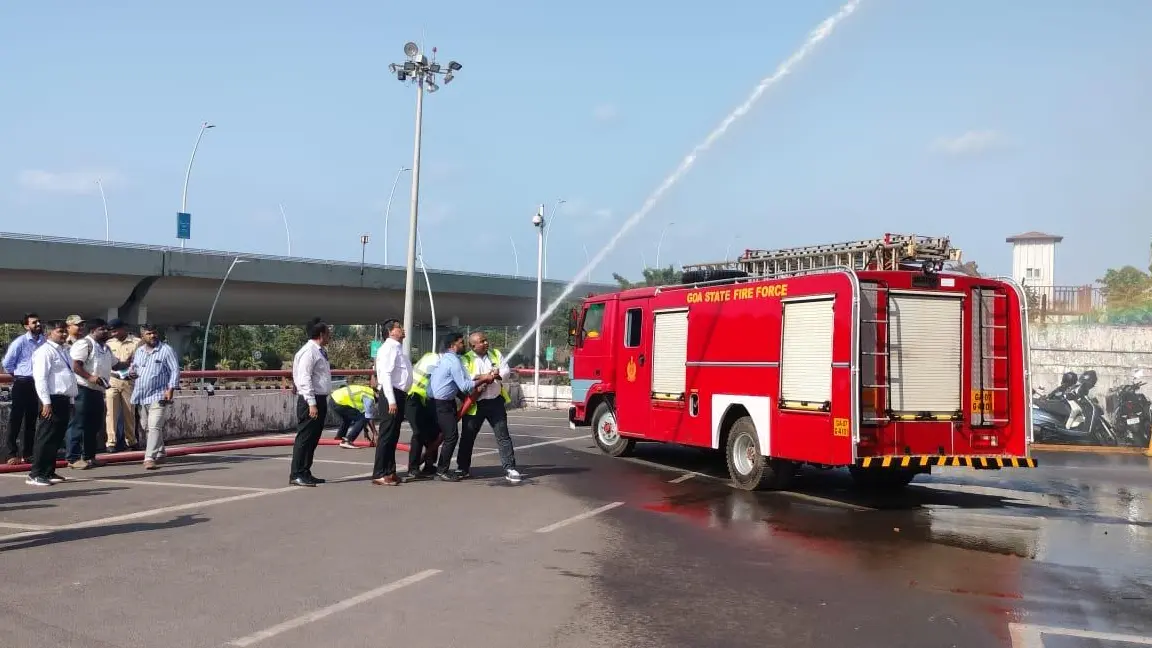
On 7 May 2025, Operation Abhyaas tested civil-defence arrangements across 244 districts. Sirens, blackout measures, evacuation procedures and control rooms were activated under hostile-attack scenarios. On 1 August 2025, Exercise Suraksha Chakra tested earthquake response at 55 locations across 18 districts in Delhi-NCR, covering sirens, evacuation, medical response and operating procedures.
The scale of these exercises signalled renewed seriousness. But a drill is valuable only when it exposes failure. Which siren could not be heard? Which hospital lost communication? Which door was locked? Which roster was obsolete? How long did evacuation take, and was the same weakness corrected before the next exercise?
The August 2026 parliamentary committee recommended at least two multi-agency exercises annually. Frequency must be paired with public after-action summaries, named owners for corrective measures and retesting.
Capability assessment at a glance
| System layer | Assessment | Principal qualification |
|---|---|---|
| Law and national planning | Stronger | The 2025 amendment is ahead of implementation, and the national plan requires revision. |
| Disaster finance | Much larger | Higher allocations do not establish uniform operational outcomes. |
| Specialist response | Broader footprint | NDRF staffing and state-level capacity remain incomplete. |
| Public warning | National reach | Public comprehension and protective action are not measured consistently. |
| Community response | Expanded | Registration totals do not establish training or deployability. |
| Urban and fire readiness | Uneven | Only one state had created an UDMA; ten had adopted the model fire legislation. |
This is not a verdict of failure. It is a map of where the next reforms must concentrate.
Six priorities for the next phase
- First, publish an annual readiness scorecard. India should measure warning delivery, evacuation time, shelter access, incident-command activation, emergency medical response and restoration of essential services by district and major city. The scorecard should distinguish capacity on paper from capacity demonstrated in an exercise or real emergency.
- Second, make urban authorities operational. High-risk cities need a time-bound schedule for Urban Disaster Management Authorities with named leadership, budgets, interoperable control rooms and public exercise calendars. Hospitals, schools, transport systems, utilities, industrial sites and large public venues should know precisely where they fit in the chain of command.
- Third, turn volunteer registrations into deployable capability. Civil Defence, Aapda Mitra and Yuva Aapda Mitra should retain their distinct mandates while using compatible training, credential and mobilisation standards. Authorities should be able to identify who is trained, recently refreshed, equipped, insured and available for a specific role.
- Fourth, close force and fire-service gaps. NDRF vacancies should be filled against a transparent timetable. States should publish the staffing, equipment, station coverage and response-time position of their disaster-response and fire services. Central assistance should be tied to measurable service improvement, not only procurement completion.
- Fifth, test the last mile twice each year. Vulnerable districts and cities should conduct at least two multi-agency exercises annually, using different scenarios. Each drill should result in a public summary, a protected operational report, deadlines for correction and a retest. Exercises must be designed to discover weakness, not to produce reassuring photographs.
- Sixth, design warnings for action rather than transmission. Standard multilingual instructions should cover evacuation, sheltering indoors, moving to higher ground, avoiding a contaminated area and waiting for verified information. Testing must include people with disabilities, linguistic minorities, low-connectivity communities and residents unfamiliar with official alert formats.
These priorities do not require a parallel bureaucracy. They require India’s existing laws, funds, institutions and technologies to be connected through a measurable last-mile doctrine. It is also the organising principle of my independently proposed Project SURAKSHA India framework: every person should have timely access to the right warning, the right protective action and functioning essential services.
The real measure of national resilience
India is better prepared for civil emergencies than it was in 2014. It can detect more hazards, warn at national scale, pre-position specialist teams, finance mitigation and mobilise a wider community network. Those are substantial achievements.
But readiness is not experienced in a ministry, a budget document or a national dashboard. It is experienced in a home, school, hospital, factory, metro station or neighbourhood at the moment normal systems begin to fail.
The Prime Minister’s 2026 call for a modern civil-defence network should therefore be treated not as the conclusion of a reform story, but as the start of its most demanding phase. India has built much of the national backbone. It must now prove—district by district and city by city—that the backbone can protect people wherever danger arrives.
Method note: This review uses public laws, parliamentary replies, commission reports and government records available through 16 September 2026. It assesses disclosed civilian preparedness, not classified capabilities, and does not treat allocations, registrations or exercises as proof of operational readiness. The conclusions and recommendations are the author’s own.